
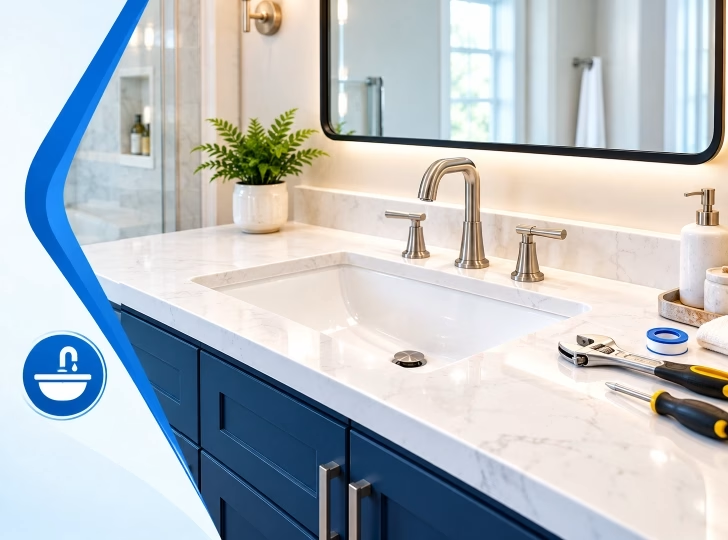

A properly installed bathroom sink should provide dependable daily use while fitting comfortably within the available counter and cabinet space. Our Sink Installation Services are for you if you want to replace an outdated sink, upgrade a vanity, install a new basin, or complete a broader bathroom remodeling project. The installation may include sink selection, measurements, countertop preparation, faucet coordination, drain connections, water supply connections, sealing, and final testing, depending on the project scope.
Replacing an old or damaged bathroom sink
Installing a new sink with a vanity or countertop
Bathroom sink installation involves more than fitting a basin into a countertop. The sink type, cabinet dimensions, countertop material, faucet configuration, drain location, and existing plumbing can all affect the installation.
Before work begins, you should determine whether you are replacing only the sink or updating the countertop, vanity, faucet, or plumbing at the same time. Measurements should also account for clearance around the sink and access to the plumbing underneath.
Sink replacement, new sink installation, vanity sink installation, vessel sinks, undermount sinks, drop-in sinks
Depends on sink type, countertop preparation, plumbing, and project complexity
Based on the existing bathroom and selected fixtures
The right sink can affect both the appearance and functionality of a bathroom. A compact basin may be suitable for a small powder room, while a larger sink or double-sink configuration may be more appropriate for a primary bathroom.
Existing plumbing should be evaluated before selecting a replacement. A sink with a different drain position or faucet configuration may require adjustments to the water supply or drainage system.
The countertop also plays an important role. Some sinks require a specific opening or support method, while others can be installed directly into or beneath a prepared countertop. The sink, countertop, faucet, and vanity should therefore be considered as one coordinated installation.

Replacing an outdated bathroom basin can provide an immediate functional and visual improvement. The existing sink is removed, and the new fixture is installed according to its specifications.

A sink installed with a bathroom vanity can combine washing space with useful storage. Installation may involve coordinating the basin, countertop, cabinet opening, faucet, drain, and water connections so the individual components work together correctly.

Drop-in sinks are designed to sit within a prepared countertop opening, with the rim resting on the counter surface. Accurate measurements are important when replacing an existing fixture or preparing a new countertop for installation.

An undermount sink is positioned beneath the countertop rather than sitting above it. This style creates a streamlined appearance and makes wiping water from the counter into the basin easier, but the countertop must be suitable for this installation method.

Pedestal sinks can be useful when homeowners want a more open bathroom floor area or a traditional fixture style. Because these sinks provide limited storage, the surrounding bathroom layout should be considered before choosing this configuration.

A sink replacement may also involve a new faucet, drain assembly, supply connections, or other components. The selected faucet should match the sink's mounting configuration, while drain and supply connections should be checked for proper fit.

Wall-mounted sinks can create an open, minimalist appearance and may be useful in compact bathrooms. The wall structure and plumbing arrangement should be evaluated to ensure the fixture can be securely supported and connected.

When a sink and countertop are being replaced together, measurements and fixture specifications need to be coordinated before installation. The basin opening, faucet holes, cabinet dimensions, and plumbing access all affect the final setup.

A new sink does not always match the location of an existing drain or water supply. Minor plumbing modifications may therefore be necessary. Any plumbing changes should be evaluated in advance so the homeowner understands how they affect the project scope.
Get a Free Estimate for Your Bathroom Now!
| Option | Best For | Common Work | Main Consideration |
|---|---|---|---|
| Sink Replacement | Existing vanity and countertop are usable | Remove old basin and install new fixture | New sink must fit existing opening |
| Sink + Vanity Upgrade | Cabinet or storage is outdated | New vanity, basin, countertop, and fixtures | Requires coordination between components |
| Complete Vanity Area Update | Several elements are worn or damaged | Vanity, counter, sink, faucet, plumbing, and related finishes | Larger project scope and installation time |
If water damage, deteriorated subflooring, mold, or plumbing problems are discovered, the scope may need to expand beyond the originally planned cosmetic work.
The cost of bathroom sink installation depends on the sink selected, countertop requirements, plumbing condition, labor, and project scope. A simple replacement can have different requirements from a new installation that involves countertop cutting or plumbing changes.
The process begins by identifying why the sink is being replaced and what type of fixture the homeowner wants to install.
The existing sink, vanity, countertop, water connections, drain, and available space are evaluated to identify compatibility issues.
Accurate measurements help confirm that the new sink will fit the countertop or vanity and leave adequate clearance for comfortable use.
The sink, faucet, drain assembly, and other components should be selected according to the existing configuration or the planned modifications.
The old fixture is disconnected and removed carefully to minimize damage to surrounding cabinetry, countertops, and plumbing.
The new basin is positioned and secured, followed by installation of the faucet, drain, supply connections, and other necessary components.
Water flow, drainage, connections, seals, and fixture stability should be checked before the work area is considered complete.
Permit requirements vary depending on the location and scope of the work. Replacing a sink in the same position may have different requirements from a project that relocates plumbing, changes walls, modifies electrical systems, or forms part of a larger bathroom renovation.
Plumbing modifications may be subject to local requirements and inspection rules. You should confirm the current requirements with the applicable building or plumbing authority before work begins.
Project evidence: No verified customer project, photograph, review, pricing record, or completed sink installation case study was provided for this page.
If verified project information becomes available, this section can describe the original sink, homeowner's objectives, selected fixture, countertop or plumbing preparation, installation process, and finished result.
Only genuine project information should be published. Customer names, reviews, photographs, prices, timelines, and project outcomes should not be created without supporting records and appropriate permission.
A bathroom sink may need replacement when it has significant damage, persistent leaks, difficult-to-repair problems, or no longer fits the bathroom's needs.
Replacing a bathroom sink can be a focused way to improve an outdated or inconvenient bathroom without undertaking a complete renovation.
The cost depends on the sink style, countertop or vanity configuration, plumbing condition, faucet, drain components, and installation requirements. A site assessment can provide a more reliable project estimate than a general price range.
A simple replacement may require only a limited amount of installation time, while projects like a new vanity, countertop modifications, or plumbing changes can take longer. The exact schedule depends on the existing setup and selected fixture.
A new sink can often be installed while keeping the existing vanity when the cabinet and countertop are in suitable condition. The replacement basin must be compatible with the existing opening and plumbing arrangement.
A sink can sometimes be relocated, but moving it may require changes to water supply and drainage lines. The added plumbing work can increase both the complexity and cost of the installation.
The best option depends on the room dimensions, storage requirements, countertop space, and desired appearance. Compact wall-mounted or pedestal sinks can save floor space, while a small vanity sink can provide both washing space and storage.
Some installation estimates include the faucet and associated components, while others cover only the sink installation. Homeowners should confirm exactly which fixtures, parts, and labor are included before approving the work.
It depends on the type and extent of countertop damage. If the surface is structurally sound and the existing opening is compatible, replacement may be possible. Water damage, cracking, or an unsuitable opening may make countertop replacement more practical.
We Got Your Query! Experts will Contact You ASAP
Call Us Directly to skip the queue and get immediate service