
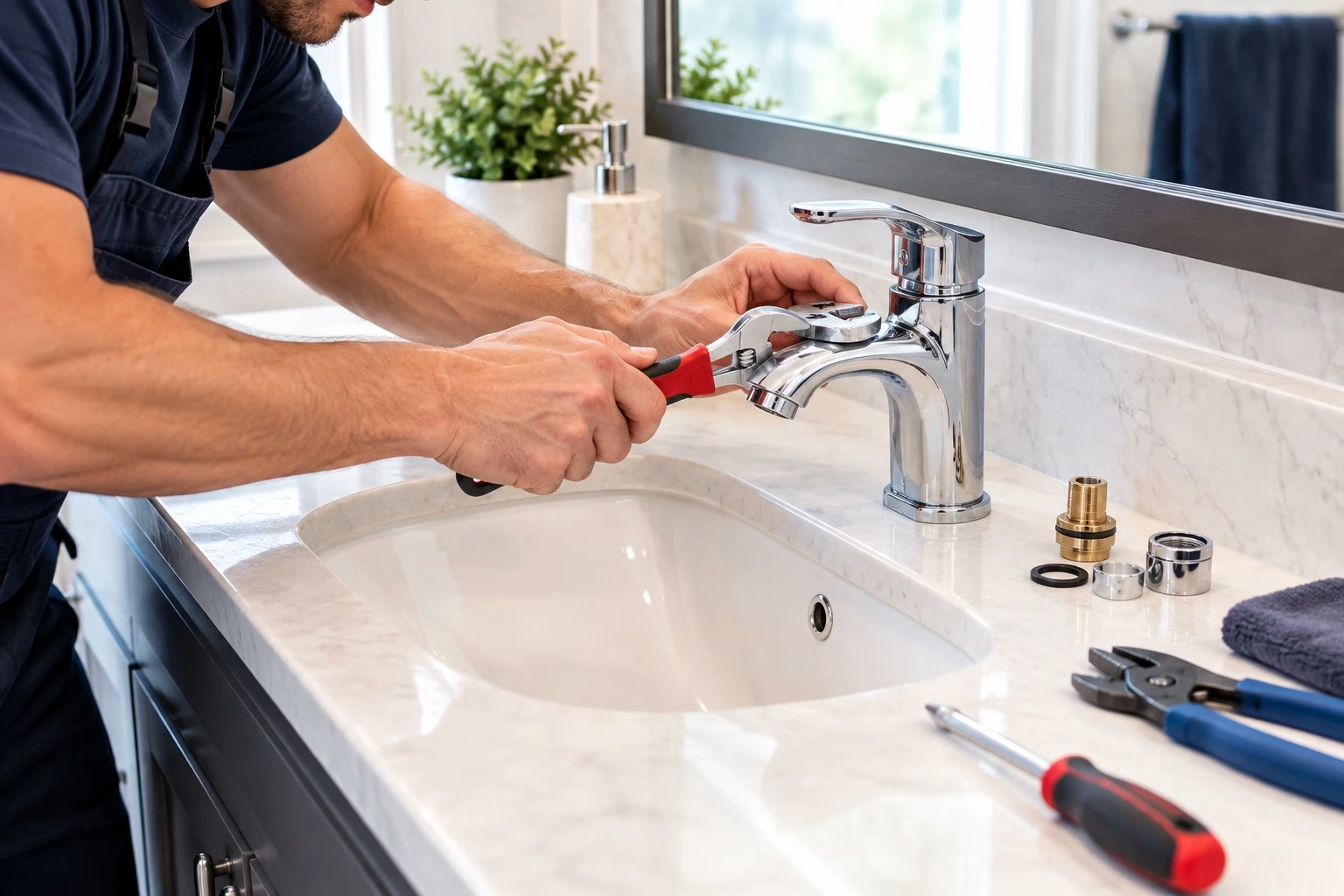
Whether your bathroom sink faucet is dripping, the handle is difficult to operate, or water is leaking underneath the sink, timely repair can prevent the problem from becoming more expensive. One of the most common questions you ask is, How much does sink and faucet repair cost? It depends on the type of faucet, the source of the problem, replacement parts, labor, accessibility, and whether additional plumbing repairs are needed.
What Affects Sink and Faucet Repair Cost?
A minor repair including a worn washer or cartridge may be relatively simple, while a damaged faucet or corroded plumbing connection may require more extensive work.
Type of Faucet
Faucets come in different designs, including single-handle, double-handle, pull-out, pull-down, widespread, centerset, and wall-mounted models. The internal components vary between designs, so the repair process and parts required can also differ.
Type of Problem
A simple drip may require only a replacement cartridge, washer, or seal. A faucet with damaged internal components or severe corrosion may need multiple parts or complete replacement.
Labor
Professional plumbing labor can vary depending on the complexity of the job and how easily the faucet can be accessed.
Replacement Parts
The cost of cartridges, aerators, O-rings, supply lines, valves, washers, and other components can affect the final bill.
Condition of the Plumbing
Sometimes the faucet itself is not the only problem. Corroded shut-off valves, damaged supply lines, or leaking connections underneath the sink can add to the repair requirements.
How Do I Fix a Leaking Sink Faucet?
If you are wondering, How do I fix a leaking sink faucet? The first step is to identify where the water is coming from. A faucet may leak from the spout, handle, base, or connections underneath the sink, and each location can indicate a different problem.
- Before attempting any repair, turn off the water supply using the shut-off valves beneath the sink. Open the faucet to release remaining water pressure.
- For a dripping faucet, the cartridge, washer, or O-ring may be worn. In some faucet designs, removing the handle and accessing the internal cartridge allows the damaged component to be replaced.
- If water is leaking around the base of the faucet, the sealing gasket may be worn or damaged. A leak underneath the sink may instead involve a supply line or connection.
- You should avoid forcing corroded fittings or unfamiliar components because doing so can cause additional damage.
- If the source of the leak is unclear, professional plumbing assistance can help identify the problem.
What are the Sink and Faucet Problems?
Several issues can affect bathroom and kitchen sink faucets.
Dripping Faucet
A faucet that continues dripping after being turned off may have a worn cartridge, washer, or valve component.
Low Water Pressure
Reduced flow can be caused by a clogged aerator, mineral buildup, supply problem, or another plumbing issue.
Loose Faucet
A loose faucet may need tightening from beneath the sink. Continued movement can eventually damage seals or connections.
Water Around the Base
Water pooling around the faucet base can indicate a damaged gasket or seal.
Leaking Connections
Flexible supply lines and connection points beneath the sink can develop leaks due to age, corrosion, or loose fittings.
Difficult Handle Movement
A stiff handle may indicate mineral buildup, corrosion, or a damaged internal cartridge.
Is Repair or Replace the Faucet Same?
Sometimes repairing a faucet makes sense, while in other situations replacement may be more practical.
- The decision depends on the faucet’s age, condition, design, availability of replacement parts, and severity of the problem.
- A newer faucet with a simple worn component may be worth repairing.
- If the faucet is heavily corroded, repeatedly leaking, physically damaged, or difficult to repair, replacement may provide a longer-term solution.
- You should compare the repair requirements with the condition of the existing fixture before making a decision.
How Long Does Sink Faucet Repair Take?
A straightforward repair may be completed relatively quickly when the problem is easy to identify and replacement parts are readily available.
- Replacing a cartridge, washer, O-ring, or aerator may take less time than replacing an entire faucet. However, additional plumbing problems can extend the work.
- Access can also affect the repair time. A faucet that is easy to reach underneath the sink may be simpler to service than one installed in a cramped cabinet or difficult location.
- If corrosion prevents fittings from being removed easily, additional time may be necessary.
- Likewise, if the shut-off valves do not work properly, they may need attention before the faucet can safely be repaired.
What are the Ways to Prevent Faucet Problems?
Regular maintenance can help reduce common faucet problems. Clean mineral deposits around the aerator and faucet openings.
- Avoid using excessive force when operating handles. Check underneath the sink for moisture, corrosion, or damaged supply lines.
- Address small leaks as soon as they appear.
- A slow drip may seem harmless, but continuous water loss can increase utility consumption and may indicate a component that needs attention.
- Keeping the area underneath the sink dry also makes it easier to identify new leaks quickly.
Frequently Asked Questions
What are the most common causes of a sink faucet leak?
Common causes include worn cartridges, damaged washers or O-rings, loose connections, deteriorated seals, mineral buildup, and corrosion.
Can a dripping faucet increase my water bill?
Even a small, continuous drip wastes water over time. Repairing the faucet promptly can help reduce unnecessary water consumption.
Is it better to repair an old faucet or replace it?
Replacement may be more practical when the fixture is heavily corroded, repeatedly develops leaks, or requires difficult-to-find parts.
What should I do if water is leaking underneath my sink?
Turn off the water supply if possible and inspect the visible connections for moisture. If you cannot identify the source or the leak continues, have a professional inspect the faucet, supply lines, and plumbing connections.
Can hard water affect sink faucets?
Mineral deposits from hard water can build up inside aerators and faucet components, restricting water flow and contributing to stiffness or premature wear.