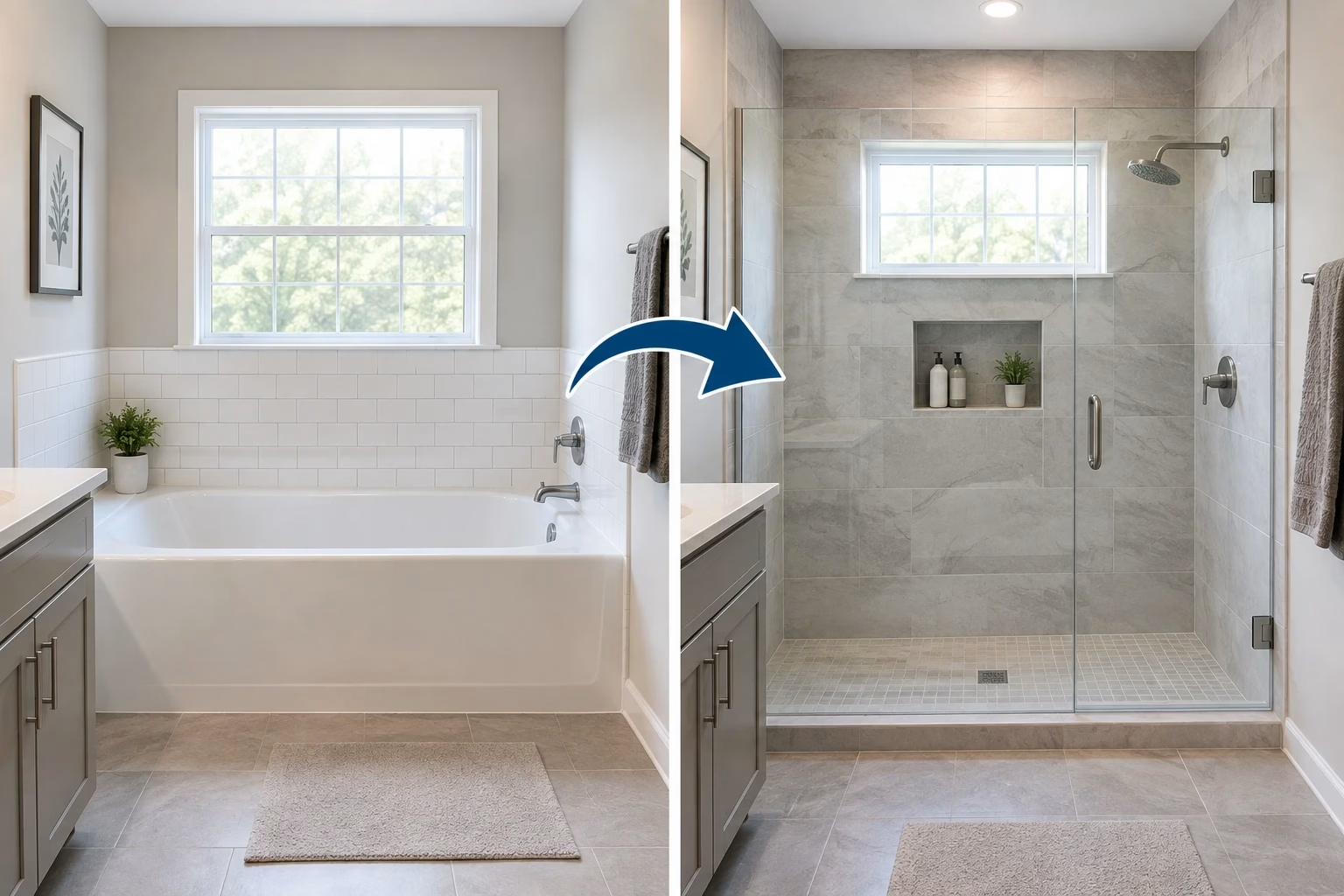
If your bathtub is rarely used or you prefer easier access, replacing it with a shower can be a practical bathroom remodeling project. Many of you ask, Can I replace my bathtub with a shower? In most bathrooms, the answer is yes, provided the available space, plumbing, drainage, floor structure, and local requirements are suitable for the new shower design.
Why Replace a Bathtub With a Shower?
There are several reasons to choose a shower conversion.
- Showers are easier to enter and exit than tubs, particularly when the existing bathtub has a high side.
- A walk-in or low-threshold shower can provide easier access while creating a more contemporary appearance.
- You can also customize the shower with different wall finishes, doors, fixtures, niches, seating, and storage.
- A shower may also suit households that prefer quick daily bathing rather than using a bathtub.
What is Involved in a Bathtub-to-Shower Conversion?
A bathtub replacement is more than simply removing the tub and installing a shower pan. The surrounding area must be prepared to handle the new shower configuration.
- Removing the existing bathtub
- Inspecting the surrounding walls and floor
- Checking plumbing and drainage
- Repairing damaged surfaces if necessary
- Preparing the shower base
- Installing waterproofing
- Installing shower walls or tile
- Connecting shower fixtures
- Installing doors or an enclosure
- Completing finishing work and cleanup
Can Existing Plumbing Be Used?
Some existing plumbing can be reused, particularly when the shower is installed in the same location as the bathtub.
- However, the shower drain and water supply connections may need modifications.
- A bathtub and shower can have different drain configurations and fixture locations.
- If you want the shower controls or drain positioned somewhere substantially different from the existing plumbing, additional work may be required.
- A professional should inspect the plumbing before the project begins and explain any modifications that may affect the budget.
How Much Does a Walk-In Shower Cost to Install?
One of the most common questions you ask is, How much does a walk-in shower cost to install? It varies considerably depending on the size, materials, fixtures, plumbing, labor, and complexity of the conversion.
- Shower size
- Shower base or pan
- Wall material
- Tile installation
- Shower doors
- Plumbing modifications
- Drain modifications
- Waterproofing
- Shower fixtures
- Built-in shelving
- Shower seating
- Removal and disposal
- Structural repairs
How to Choose the Right Walk-In Shower?
Walk-in showers are available in numerous designs. A simple low-threshold shower may work well for you if you want improved access without changing the bathroom layout.
- For accessibility-focused remodeling, you can consider a curbless shower, handheld showerhead, grab bars, built-in seating, and easily accessible controls.
- The size of the shower should also provide enough room for comfortable movement.
- Door placement and the location of fixtures should be considered before installation.
- For smaller bathrooms, a carefully walk-in shower can make the room feel more open. Glass panels can help maintain a spacious visual appearance.
Which Shower Materials and Finishes to Use?
The material you choose can influence appearance, maintenance, durability, and cost.
- Ceramic and porcelain tiles are popular because they are available in many colors, patterns, textures, and sizes.
- Acrylic and fiberglass shower systems can provide a simpler installation and are generally easy to clean.
- Solid-surface panels can provide a contemporary appearance with fewer grout lines.
- Your choice should consider your budget, cleaning preferences, bathroom design, and long-term maintenance expectations.
Should I Hire a Plumber or Shower Installer?
Another common question is: Should I hire a plumber or shower installer? It depends on the scope of your project.
- A plumber is particularly important when the conversion requires changes to water supply lines, drain connections, valves, or other plumbing components.
- A shower installer or bathroom remodeling professional may handle the shower base, wall system, waterproofing, enclosure, tile, fixtures, and finishing work.
- For a complete bathtub-to-shower conversion, multiple trades may be involved.
- Our bathroom remodeling services coordinate the different aspects of the project so that the homeowner does not have to manage separate contractors.
- Our professional should be able to explain whether plumbing, waterproofing, electrical work, tile installation, demolition, and finishing are included.
Why Waterproofing Is Essential?
Waterproofing is one of the most important parts of any shower installation. Water can penetrate improperly protected walls and floors, which causes moisture damage behind the finished surfaces.
The shower walls, corners, joints, and floor should be properly waterproofed according to the requirements of the selected system.
Do not treat waterproofing as an optional upgrade. It is a fundamental part of building a durable shower.
Is a Bathtub-to-Shower Conversion Right for Your Bathroom?
Before removing the tub, consider how the bathroom is used. If nobody regularly takes baths and the shower would be more convenient, conversion may make sense.
- However, you should also consider the needs of other household members and the overall layout of the property.
- The available space, plumbing location, ventilation, storage, and bathroom flooring should all be reviewed before construction.
- It can also be useful to think about future accessibility.
- A low-threshold or curbless shower may provide easier access for many people and can be made with additional safety features.
Frequently Asked Questions
How long does it take to replace a bathtub with a shower?
A simple bathtub-to-shower conversion may take a few days, while projects including plumbing changes, tile work, structural repairs, or customized features can take longer.
Is a walk-in shower suitable for a small bathroom?
A properly planned walk-in shower can work well in a small bathroom. The shower dimensions, door configuration, and placement of fixtures can maximize available space.
Do I need to change the plumbing when replacing a tub with a shower?
Some existing plumbing can often be reused when the shower stays in the same location. However, drain and water-supply modifications may be necessary depending on the new design.
Is waterproofing necessary when installing a new shower?
Proper waterproofing helps protect the walls, floor, and surrounding structure from moisture penetration. It is an essential part of a durable shower installation.
Can I add accessibility features to my new shower?
Features such as a low-threshold or curbless entry, handheld showerhead, grab bars, built-in seating, and positioned controls can be incorporated into a shower design.