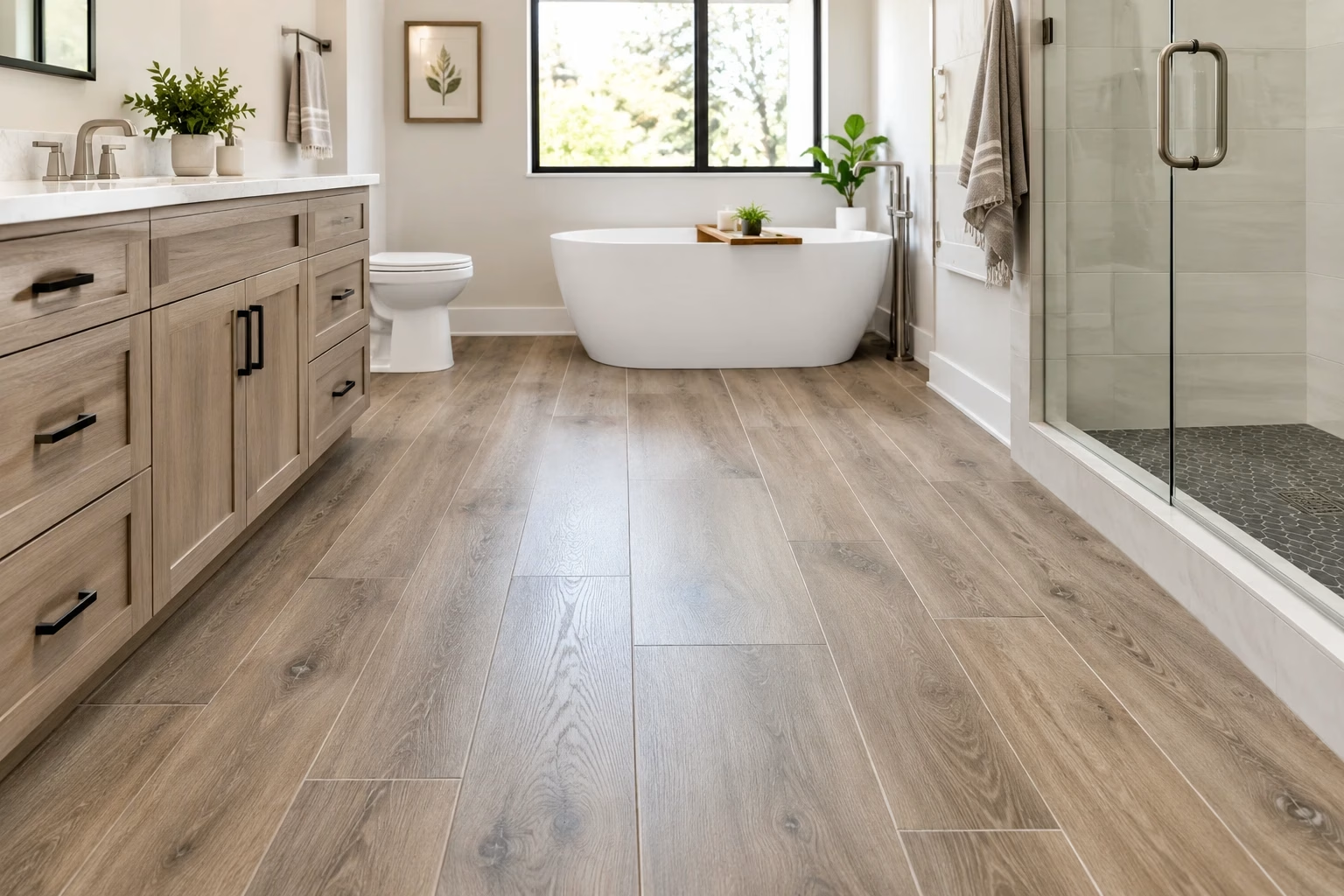
Bathrooms experience frequent exposure to water, humidity, spills, and changing temperatures, so the flooring needs to handle moisture while remaining safe, comfortable, and attractive. If you are wondering which type of flooring is best for a bathroom? Several materials can work well, including porcelain tile, ceramic tile, luxury vinyl, natural stone, and certain waterproof flooring products.
What Makes a Good Bathroom Floor?
Bathroom flooring needs to perform differently from flooring in bedrooms or living rooms. Water can reach the floor around a shower, bathtub, toilet, and sink, while steam can increase humidity throughout the room.
- Moisture resistant
- Durable
- Easy to clean
- Comfortable to walk on
- Slip resistant
- Suitable for the room’s subfloor
- Compatible with the bathroom’s overall design
- Appropriate for the available budget
Porcelain Tile
Porcelain tile is one of the most practical choices for many bathrooms. It is dense, durable, and available in a wide variety of colors, patterns, textures, and finishes.
- Porcelain can resemble natural stone, wood, or concrete, making it suitable for both traditional and contemporary bathrooms.
- Smaller tiles can also provide additional grout lines, which may improve traction in wet areas.
- However, grout requires regular cleaning and maintenance. Professional installation is important to achieve a level surface and appropriate waterproofing around wet areas.
Ceramic Tile
Ceramic tile is another popular bathroom flooring option. It comes in many designs and can work with almost any decorating style.
- Ceramic flooring is easy to clean and can be suitable for areas exposed to moisture when the correct product and installation system are used.
- When selecting tile, pay attention to the surface texture and slip resistance.
- A very smooth surface may become slippery when wet, so bathroom flooring should be selected with safety in mind.
Luxury Vinyl Flooring
Water-resistant or waterproof luxury vinyl flooring can provide a comfortable alternative to hard tile. It is available in styles that imitate wood, stone, and other materials.
One advantage of vinyl is that it can feel warmer and softer underfoot than ceramic or porcelain tile. It is also relatively easy to maintain.
However, the specific product should be suitable for bathroom installation. Waterproof claims can vary by product, and proper installation around toilets, bathtubs, showers, and other plumbing fixtures is essential.
Natural Stone Flooring
Natural stone can give a bathroom a distinctive, high-end appearance. Marble, slate, limestone, and other stones can create unique patterns and textures.
- Stone flooring may require sealing and ongoing maintenance depending on the material.
- Some types can be porous and may absorb moisture or become stained if they are not properly maintained.
- Natural stone can also be more expensive than some manufactured flooring options.
- You should consider both installation and long-term maintenance when planning the project.
Laminate Flooring in a Bathroom
Traditional laminate flooring requires caution in bathrooms because prolonged exposure to moisture can damage some products.
- Water can potentially enter joints or edges and affect the material underneath.
- Modern water-resistant or waterproof laminate products may be suitable for certain bathroom applications, but you should always check the manufacturer’s installation requirements and warranty conditions.
- This is particularly important around toilets and other plumbing fixtures.
Can I Install a Toilet Over Laminate Flooring?
A common question during bathroom remodeling is: Can I install a toilet over laminate flooring? It depends on the specific laminate product and the manufacturer’s installation instructions.
- If the flooring is approved for bathroom use and the installation system allows it, a toilet may be installed over the finished flooring.
- The toilet must be properly secured, and the area around the toilet flange needs to be handled correctly.
- However, the toilet flange and subfloor relationship is important.
- Simply placing a toilet on top of flooring without considering flange height, stability, and sealing can create installation problems.
- Our bathroom remodeling contractor can evaluate the existing plumbing and subfloor before the flooring is installed.
What About Waterproofing?
Flooring alone does not make a bathroom waterproof.
- Waterproofing is a system that protects the structure beneath the finished surfaces from moisture intrusion.
- Areas around showers and tubs require particular attention.
- Depending on the bathroom design, waterproof membranes, appropriate backer materials, sealants, and properly installed transitions may be necessary.
- The floor around a toilet and other plumbing fixtures should also be carefully sealed according to the flooring manufacturer’s requirements.
- Proper waterproofing can help protect the subfloor and reduce the risk of moisture-related damage.
How Much Does 1000 Square Feet of Flooring Cost?
If you are planning a larger remodeling project, you may ask, How much does 1000 square feet of flooring cost? There is no single answer because flooring costs vary by material, product quality, installation method, labor rates, subfloor preparation, and project location.
- Flooring materials
- Underlayment
- Adhesive or mortar
- Grout
- Waterproofing materials
- Removal of existing flooring
- Subfloor repairs
- Labor
- Disposal fees
- Transitions and trim
- Additional installation materials
Which Flooring is Best for Small Bathrooms?
Small bathrooms can benefit from flooring that creates a visually open appearance.
- Large-format tiles can reduce the number of visible grout lines, while lighter colors can make a compact room feel more spacious.
- However, tile size should also work with the room’s layout.
- A bathroom containing many corners, fixtures, or unusual angles may require more cutting when large tiles are used.
- Smaller tiles can provide more flexibility around drains and irregular areas.
- The right choice depends on both appearance and installation requirements.
Frequently Asked Questions
What is the most durable flooring option for a bathroom?
Porcelain and ceramic tiles are commonly chosen for bathrooms because they are durable, moisture-resistant, easy to clean, and available in many designs.
Is vinyl flooring suitable for bathrooms?
Waterproof luxury vinyl flooring can be suitable for bathrooms when the specific product is approved for wet areas and installed correctly.
Is bathroom flooring expensive to install?
The total cost depends on the flooring material, bathroom size, labor, removal of existing flooring, subfloor repairs, waterproofing, and installation complexity.
Should bathroom flooring be waterproof or water resistant?
Waterproof flooring is preferable where available, particularly in areas regularly exposed to moisture. However, the entire bathroom still requires proper waterproofing and sealing.
How can I prevent bathroom flooring from becoming slippery?
Choose flooring with an appropriate textured or slip-resistant surface for areas around showers and bathtubs.